
Academic Operations: Small Habits, Big Results
By TimetableAdmin Team · Academic Operations Editorial
Introduction
Academic operations rarely fail dramatically. They erode quietly — one missed update, one skipped review, one workaround at a time.
The institutions that run well are usually those that have quietly built small habits into their weekly rhythm.
Background
Most schools and colleges already have the tools they need. What they often lack is a consistent operating cadence — the small, repeatable actions that keep information fresh and decisions timely.
Habits That Compound
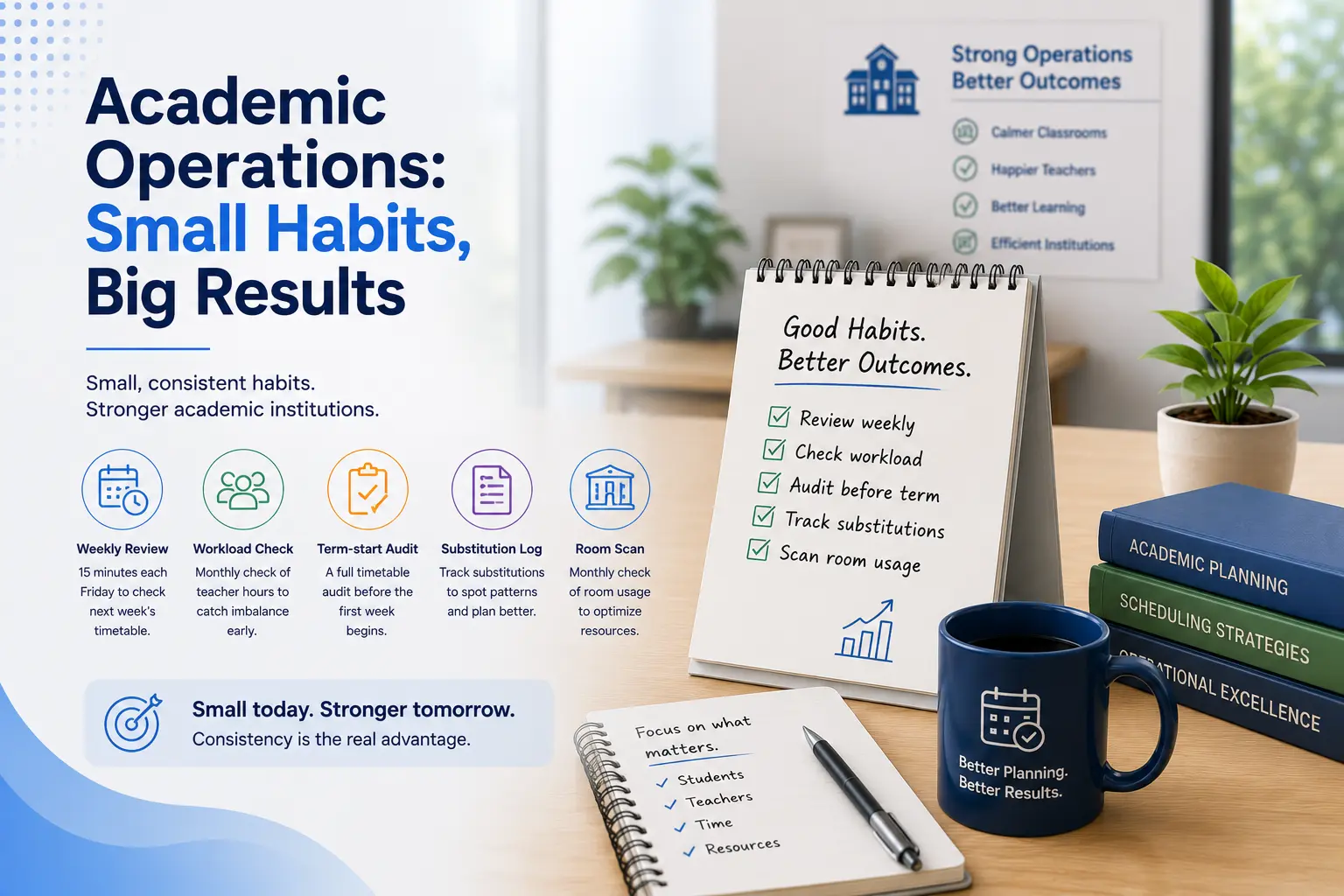
- Weekly timetable review. Fifteen minutes each Friday to check next week's schedule.
- Monthly workload check. A quick look at teacher hours to catch imbalance early.
- Term-start audit. A full timetable audit before the first week begins.
- Substitution log. A running record of substitutions to spot patterns.
- Room utilization scan. A monthly check of which rooms are under- or over-used.
None of these is dramatic. Together, they change how the institution feels.
Practical Insights
Start with one habit. Make it easy, make it visible, and protect it. Add the next only after the first is stable.
Culture follows cadence — not the other way around.
TimetableAdmin Perspective
TimetableAdmin is designed to make these habits low-effort. Audits, workload views, and substitution tracking are one click away, so the cost of the habit stays small.
Summary
Great academic operations are the sum of small, consistent choices. Start small, stay consistent, and the results follow.